8 Days Rwenzori Trekking to Margherita Peak via the Bukurungu Route.
This 8 Days Rwenzori trekking expeditions utilizes Bukurungu trail route To Margherita Peak at 5109m. The Rwenzori Mountains, famously known as the “Mountains of the Moon,” are among Africa’s most extraordinary and demanding trekking destinations. Straddling the border between Uganda and the Democratic Republic of Congo, this UNESCO-listed range is celebrated for its dramatic scenery, rare ecosystems, and remote wilderness character.
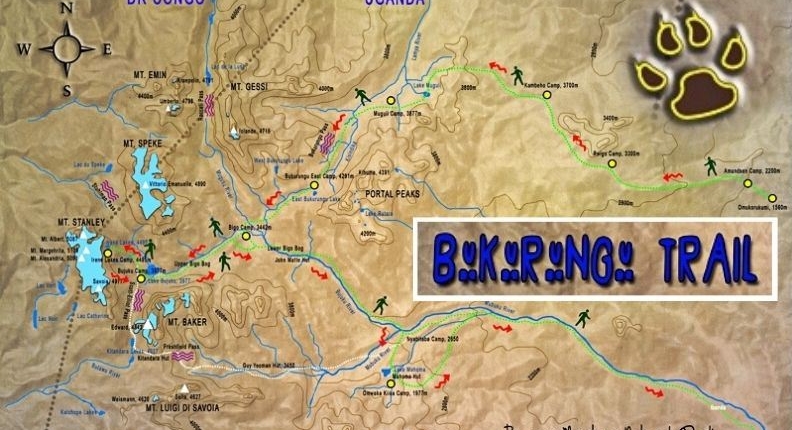
This 8-day adventure along the Bukurungu Route offers an immersive journey deep into the heart of the mountains, ultimately leading to Margherita Peak (5,109m), the highest summit in the range.
The expedition unfolds through a stunning progression of ecological zones. It begins in humid tropical rain forest, continues through bamboo and heather-covered slopes, and gradually ascends into rugged alpine terrain and glacier landscapes. Each stage of the climb introduces new scenery, changing weather conditions, and increasing altitude challenges, making the experience both physically demanding and visually rewarding.
Beyond the natural beauty, the trek also offers cultural encounters with the Bakonzo people, whose traditions and livelihoods are closely linked to the mountains. Supported by experienced guides and porters, this journey blends endurance, acclimatization, and exploration into a single unforgettable high-altitude experience.
8-Day Rwenzori Trekking to Margherita Peak Bukurungu Route
- Day 1: Transfer to Amundsen Camp (2210m)
- Day 2: Hike to Kambeho Camp (3700m) via Rwigho Camp (3300m)
- Day 3: Trek to Mughuli Camp
- Day 4: Hike to Bigo Hut via Lamia Camp (4091m)
- Day 5: Ascent to Irene Lakes Camp (4495m)
- Day 6: Summit Margherita Peak (5109m) and return to Bujuku Camp
- Day 7: Descend to Nyabitaba Camp
- Day 8: Hike to Nyakalengija (2650m) and departure
Detailed Itinerary: 8 Days Rwenzori Trekking To Margherita Peak Via Burungu Trail
Day 1: Transfer to Amundsen Camp (2210m)
After a long journey to the Rwenzori region, the day starts calmly with breakfast around 7:00 AM. You then proceed to Kasese town, where you meet your trekking team at the Rwenzori Ranges Hikers Association office. Here, all hiking equipment is carefully inspected to ensure you are fully prepared for the mountain conditions ahead.
From Kasese, the journey continues to Mukorokimi, the official starting point of the trek. At this location, you are introduced to the porters who will assist with carrying luggage throughout the expedition. The trail begins gently, passing through cultivated farmland, coffee plantations, small settlements, and local schools. This section offers a cultural introduction to the Bakonzo community, allowing interaction and observation of daily rural life.
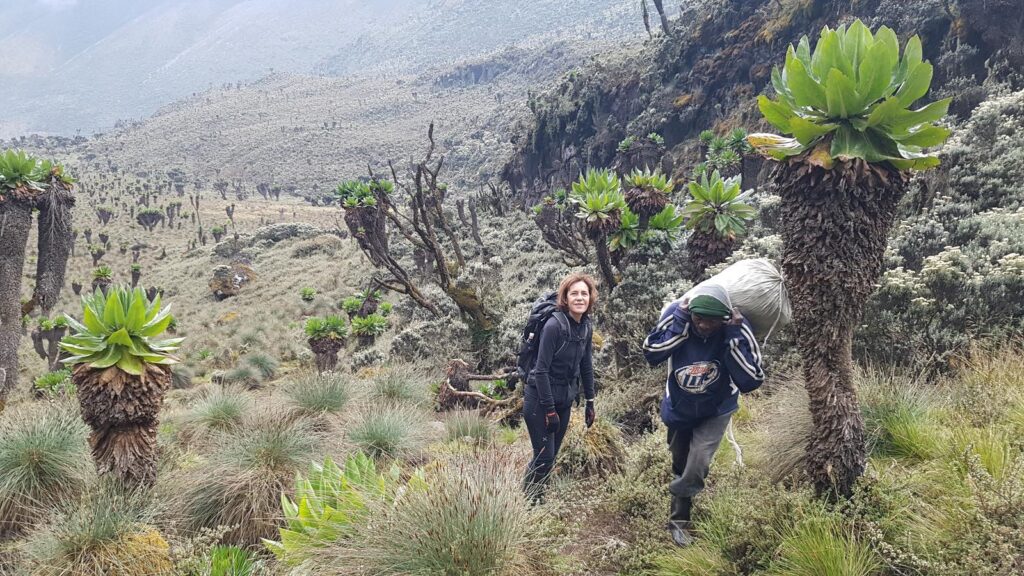
The walk is comfortable and scenic, lasting about 2–3 hours. By afternoon, you arrive at Amundsen Community Camp, located near the edge of the national park. This first overnight stop allows you to rest, adjust, and prepare mentally and physically for the more challenging terrain ahead.
Day 2: Trek to Kambeho Camp (3700m) via Rwigho Camp (3300m)
After an early breakfast, the climb begins with a steady ascent along a ridge overlooking the Kasuka and Isule valleys. The trail leads to Kebitakuli, a natural resting area ideal for short breaks and landscape viewing. From here, the path enters dense montane forest before gradually transitioning into bamboo vegetation.
Along the way, you may observe diverse plant life such as Disa stairsii and Impatiens apiculata. Wildlife signs like chimpanzee nests and calls are common, while colobus monkeys and the Rwenzori Turaco are often heard or seen in the canopy. After approximately 5–6 hours of hiking, you reach Rwigho Camp, where some trekkers may choose to stop for the night.
For those continuing, the route becomes steeper and more rugged, entering the heather zone. This section is covered with moss-draped trees, giant heathers, and alpine plants. The final 4-hour push leads to Kambeho Camp, where you spend the night in a colder, higher-altitude environment.
Day 3: Hike to Mughuli Camp
The day begins with a demanding climb along the Lhume River valley. Starting early is important as the Mughuli bypass is steep and physically challenging. This section tests endurance but rewards hikers with increasingly dramatic scenery as altitude rises.
As you approach Lake Mughuli, the environment becomes calmer and more scenic. The lake area also offers one of the few points along the route with mobile network coverage, giving you a brief chance to communicate with the outside world. The surroundings are peaceful, making it a good place for rest and reflection.
Wildlife in this zone includes Rwenzori red duikers, hyraxes, and occasionally wild pigs. Waterfalls and small viewpoints near the camp provide optional short explorations. The hike from Kambeho to Mughuli Camp takes approximately 6–7 hours, including a stop at Mulhalhama viewpoint. You arrive in the evening and settle in for the night surrounded by mountain wilderness.
Day 4: Trek to Bigo Hut via Lamia Camp (4091m)
This section of the journey is considered one of the most scenic. Lamia Camp sits between the Portal Peaks and Mount Gessi, offering panoramic views of surrounding valleys and peaks. It also serves as an important acclimatization point.
From Lamia, the trail continues toward Bigo Hut over 5–7 hours of hiking. The route steadily climbs through bamboo forests, then transitions into alpine vegetation. Sections of the trail are muddy and boggy, with wooden boardwalks installed in some areas to ease movement.
As elevation increases, vegetation becomes sparse, dominated by giant lobelias, groundsels, and hardy alpine plants. The air becomes thinner and colder, requiring a slower pace. Near Bigo Hut, wide open valleys and mountain views create a dramatic high-altitude setting. This stage is physically demanding but essential for proper acclimatization.
Day 5: Ascent to Irene Lakes Camp (4495m)
After an early start, you move through a stunning valley filled with waterfalls, giant lobelias, and heather trees. The landscape becomes increasingly dramatic as you gain altitude, with glacial streams feeding into the valley below.
You eventually reach Lake Bujuku, formed by meltwater from Mount Stanley, Mount Speke, and Mount Baker. The walk alongside the lake is one of the most scenic parts of the entire trek, offering mirror-like reflections of surrounding peaks.
From Lake Bujuku, it is another 1.5 hours to Irene Lakes Camp, the final base before the summit attempt. Upon arrival, the focus shifts to rest, hydration, and preparation. Guides provide briefing on the summit strategy, and all gear is organized in readiness for the next day’s early start.
Day 6: Summit Margherita Peak (5109m) and Return to Bujuku Camp
This is the most demanding day of the expedition. The ascent begins between 3:00 AM and 4:30 AM under headlamp light. The route climbs through rocky terrain and glacier sections where crampons and ropes are required for safety.
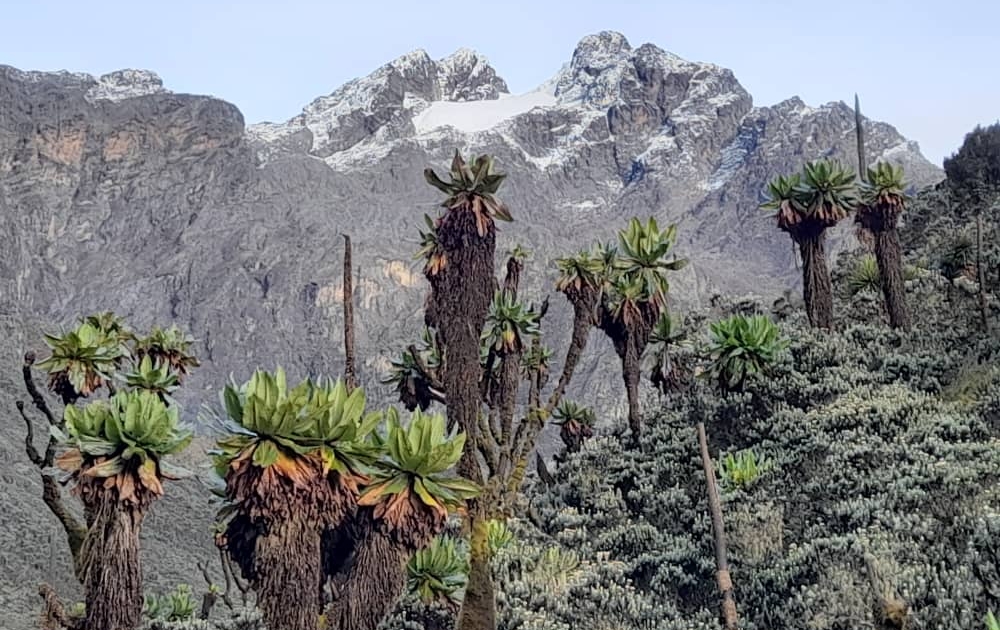
Conditions may include cold winds, fog, and slow movement due to altitude. Despite the difficulty, persistence leads to Margherita Peak, the highest point in the Rwenzori Mountains. On clear days, views extend to Mount Speke, Mount Baker, and the Congo basin.
After spending time at the summit, you begin the descent back to Bujuku Camp. The return is physically tiring but necessary for recovery. By evening, you reach camp and rest after completing the most important achievement of the trek.
Day 7: Descent to Nyabitaba Camp
After breakfast, the descent begins through varied landscapes. The trail passes John Matte Camp and continues toward Nyamuleju Rest Shelter, offering opportunities to rest along the way.
The route then reaches Kurt Shafer Bridge, located at the junction of the Mubuku and Bujuku rivers. This iconic location provides a scenic highlight during the descent.
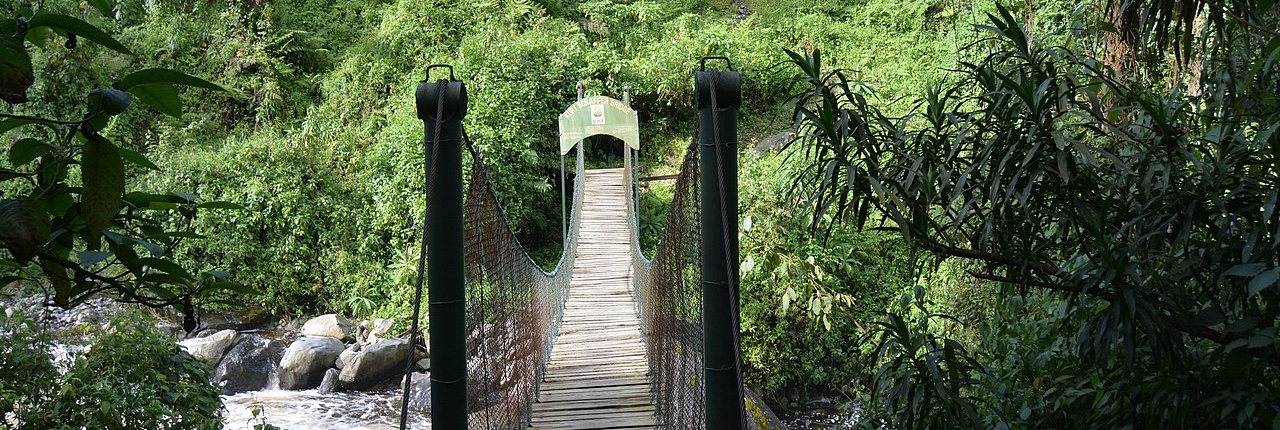
As you continue downward, vegetation becomes denser and greener, with moss-covered rocks and forest returning. The hike takes about 6–7 hours before arriving at Nyabitaba Camp. The evening is spent resting and reflecting on the summit experience.
Day 8: Nyabitaba to Nyakalengija (2650m) and Departure
The final day involves a gradual descent through afro-montane forest toward Mihunga Park Gate. The trek lasts about 3–4 hours and offers one last chance to experience the biodiversity of the Rwenzori Mountains.
Wildlife sightings may include colobus monkeys, blue monkeys, chameleons, butterflies, and a variety of bird species such as sunbirds and turacos. The forest provides a peaceful ending to the journey.
At Nyakalengija, you officially complete the 8 day Rwenzori trekking to Margherita Peak via Bukurungu Trail. From here, you connect with onward transport, marking the end of your Rwenzori adventure.
End of 8-Day Trek to Margherita Peak in the Rwenzori Mountains via the Bukurungu Route.
Price includes:
- Hiking fees in the Bukurungu trail
- Park entrance
- Trained guides
- Porters in Rwenzori mountains
- Meals
- Wages
- Rescue
- Government tax
- Camping gear and handling
Price Excludes
- Technical hiking gears like crampons, ropes, harness, ice axe, helmet plus also rubber boots
- You can hire equipment at Bukurungu trail stores ( ice axe-$15, climbing rope-$25), harness-$25, climbing boot-$25, crampons-$25, gloves-$7, sleeping mat-$7, rubber boot-$7)
- Each extra peak that is charge USD150 each
- Accommodation before the hike
- Transportation to Kasese.
- Tips
- Porters during gorilla hiking
- Air ticket
- Personal hiking gears
- Other items of personal nature
- Other personal expenses not included in the package.
- VISA: You all need a visa to enter Uganda application is done online https://visas.immigration.go.ug/
- Vaccine: Yellow fever is still required. Make sure you are up to date needed at Entebbe International Airport.
Rwenzori Mountains Packing Guide
Trekking in the Rwenzori Mountains is very different from typical African hikes. The journey takes you through several climate zones in a short period—starting in dense, humid rainforest, passing through bamboo and heather landscapes, and ending in cold alpine and glacial terrain. Because of these dramatic environmental shifts, the gear you bring is crucial for both safety and comfort.
Below is a detailed breakdown of what you need and why it matters.
Essential Technical Equipment
Rope
In the upper sections of the mountain, particularly near Margherita Peak, climbers encounter steep rock and icy surfaces. These areas are often slick due to moisture. Guides use ropes to secure hikers, especially in exposed sections and while crossing glaciers, reducing the risk of falls.
Crampons
The summit zones feature permanent ice and snow that can become extremely hard, especially in the morning. Crampons fasten to your boots and provide the traction needed to walk safely on these frozen surfaces.
Ice Axe
This tool is essential for stability on steep slopes and can be used to stop yourself if you slip. It’s a critical safety item when navigating glacial terrain.
Harness
A climbing harness allows you to be clipped into ropes for protection. It distributes your weight evenly and keeps you secure when tackling steep or exposed sections.
Helmet
Rockfall and chunks of ice can occur in certain areas. Wearing a helmet protects your head from potential injury in these conditions.
Clothing and Personal Gear
Hiking Boots
Choose sturdy, waterproof boots with good ankle support. Lower sections are muddy and wet, while higher elevations are cold and icy. Your boots should also be compatible with crampons.
Hiking Trousers
Durable, water-resistant trousers protect against mud, rain, insects, and rough vegetation. Quick-drying materials are highly recommended.
Breathable Shirts
Lightweight shirts are ideal for the warm and humid lower zones, helping regulate body temperature during long hikes.
Insulated Jacket or Fleece
As altitude increases, temperatures drop sharply. A warm layer is essential for evenings, early mornings, and summit attempts.
Waterproof Gloves
Cold, wet conditions can quickly numb your hands. Gloves keep them warm and ensure a firm grip on equipment.
Headlamp (with extra batteries)
Summit day typically starts before dawn. A reliable headlamp is essential, and spare batteries are important since cold weather drains power quickly.
Daypack
A comfortable backpack is needed for daily essentials like water, snacks, and rain gear. Ideally, it should be lightweight and water-resistant.
Sun Hat
Even at high altitude, sunlight can be intense. A hat helps protect your face and reduce fatigue.
Small Towels or Cloths
Useful for drying off, cleaning up, and maintaining basic hygiene.
Sunglasses
Strong UV protection is important, as sunlight reflects intensely off snow and ice at higher elevations.
Gaiters
Worn over your boots, gaiters prevent mud, water, and debris from getting inside—especially useful in swampy areas.
Trekking Poles
These improve balance on slippery ground, reduce strain on your knees, and help you navigate uneven terrain.
Rain Gear
Waterproof jacket and trousers are essential, as rainfall is frequent and unpredictable.
Wool Socks
Warm, moisture-wicking socks help prevent blisters and keep your feet comfortable even in damp conditions.
Camp Clothing and Footwear
After hiking, changing into dry, comfortable clothes is important. Lightweight shoes or sandals give your feet a chance to recover.
Sleeping and Camping Essentials
Cold-Weather Sleeping Bag
Temperatures at higher camps can fall below freezing. A well-insulated sleeping bag ensures you stay warm through the night.
Sleeping Mat
Provides insulation from the cold ground and improves overall comfort while sleeping.
Rubber Boots (usually provided)
In the lower regions, trails are often flooded or extremely muddy. Rubber boots are practical here before switching to hiking boots higher up.
Health and Personal Care
Medications
Bring basic medical supplies such as personal prescriptions, an inhaler if needed, and treatment for common travel illnesses. Consult a doctor before your trip.
Sunscreen and Lip Balm
High-altitude sun exposure is strong. Use high-SPF sunscreen and lip balm to protect your skin.
Water Bottles or Hydration System
Carry at least 1–2 liters of water. Hydration packs make it easier to drink regularly while walking.
Thermos (optional)
Useful for keeping drinks warm in colder sections of the trek.
Hand Warmers
Helpful during very cold conditions, especially on summit day.
Toiletries
Pack essentials like soap, wipes, and a small towel to maintain hygiene during the trek.
Bags and Storage
Duffel Bag
A large, durable bag is used for your main gear, which porters will carry.
Daypack
Your personal backpack for items you need during the day’s hike.
Optional Extras
- Books or music for relaxation at camp
- Camera with spare batteries and memory cards
- Earplugs for windy or noisy nights
- High-energy snacks (avoid sticky sweets)
- Warm hat, balaclava, or fleece cap