Where to Stay on the Rwenzori Central Circuit Trek
The Central Circuit trail of the Rwenzori Mountains is a long-distance trekking route that moves gradually from low rainforest to high alpine glaciers. What makes this journey unique is not only the climbing experience but the system of overnight camps placed along the way. Each camp is positioned at a specific altitude to support acclimatization, rest, and safe progression through changing terrain.
As hikers move upward, the environment transforms step by step. Dense tropical forest gives way to bamboo slopes, then to heather-covered valleys, and eventually to icy landscapes near the highest peaks. Every overnight stop reflects this change and offers a completely different setting. Some camps are surrounded by rivers and waterfalls, while others sit in open valleys with wide mountain views or beneath towering rock walls.
These camps are essential parts of the trekking experience. They are not luxury lodges, but simple mountain shelters designed for safety and endurance. Around them, however, nature creates the real attraction—wildlife, alpine plants, dramatic peaks, lakes, and valleys. Understanding each camp helps trekkers prepare properly and enjoy the full story of the Rwenzori Mountains.
Highlights: Central Circuit Huts/Camps
- Nyabitaba Camp (2,651m)
- John Matte Camp (3,505m)
- Bujuku Camp (3,962m)
- Elena Hut (4,541m):
- Kitandara Camp (4,023m):
- Guy Yeoman Camp (3,261m):
Comprehensive Details About The Central Circuit Trail Route
Nyabitaba Camp (2,651m): Forest Entry Point and River View Ridge
Nyabitaba Camp is the first overnight stop inside the Rwenzori Mountains and introduces hikers to the forested world of the range. The trail begins through farmland edges before entering thick montane forest filled with tall trees, vines, and constant bird activity. The sound of the Mubuku River below the ridge follows the entire climb and becomes stronger as you approach the camp.
The vegetation here is dense and green, with moss-covered trunks and shaded pathways. Wildlife sightings are common, especially black-and-white colobus monkeys and other primates moving through the canopy. Birdlife is also active, adding sound and movement throughout the forest. On clear days, distant views of the Rwenzori peaks appear above the clouds.

Resting in the Evening at Nyabitaba hut
Nyabitaba Camp sits close to a ridge where valleys meet far below. It offers basic wooden huts and a calm resting environment. Evenings are quiet, with mist rising through the forest.
Key attractions: Mubuku River valley views, colobus monkeys, montane rainforest canopy, forest birds, distant mountain peaks, ridge viewpoint scenery.
John Matte Camp (3,505m): Deep Forest Valleys within the Heather Transition Zone
John Matte Camp is located deeper in the mountain and requires a long climb through steep, slippery forest paths and bamboo sections. This area represents a clear ecological transition where montane forest begins to merge with bamboo and early heather vegetation higher up the slopes. Giant trees, moss-covered branches, and hanging lichens dominate the landscape, creating a layered green environment.
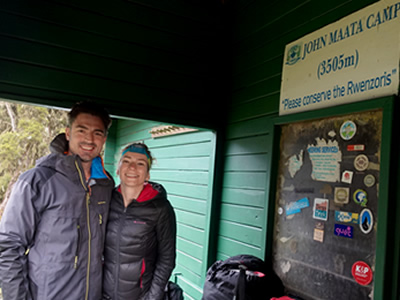
The Bujuku River remains a strong presence throughout the approach, flowing through the valley and shaping the terrain. The sound of rushing water is constant and adds life to the journey. The valley itself is wide but enclosed, with mist often settling in the morning and evening.
Wildlife is still active here, including blue monkeys, forest birds, and occasional small mammals moving through the vegetation. At night, temperatures drop quickly, and the atmosphere becomes very still apart from river sounds.
Key attractions: Bujuku River, deep valley forest scenery, early heather zone vegetation, mist-covered slopes, primate sightings, transitional mountain ecosystem views.
Bujuku Camp (3,962m): Alpine Basin Surrounded by Giant Peaks and Lakes
Bujuku Camp is one of the most iconic stops on the Central Circuit trail, located in a wide alpine valley surrounded by the highest peaks of the Rwenzori. The trail passes through the upper and lower sections of Bigo Bog, where wooden boardwalks cross wet terrain filled with unique alpine vegetation.
The camp sits between Mount Stanley, Mount Baker, and Mount Speke, creating a dramatic natural amphitheatre. Nearby, Lake Bujuku reflects surrounding peaks when skies are clear, offering one of the most scenic views in the mountains.
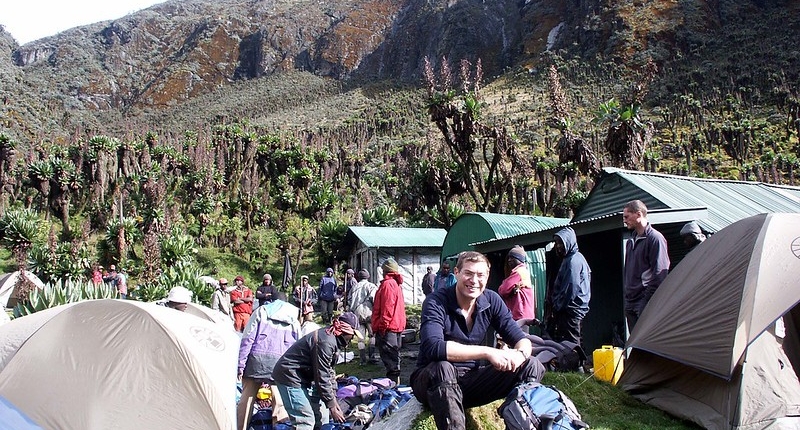
The environment here is cold, open, and constantly changing. Clouds move quickly through the valley, shifting light and visibility. Vegetation is distinctly alpine, dominated by giant lobelias, groundsels, and everlasting flowers that give the landscape a prehistoric appearance.
Key attractions: Lake Bujuku, Bigo Bog boardwalks, panoramic views of Mount Stanley–Baker–Speke, giant lobelias and groundsels, alpine valley scenery, shifting cloud landscapes.
Elena Hut (4,541m): Rocky High Camp beneath Mount Stanley Glaciers
Elena Hut is the final overnight stop before the summit attempt of Margherita Peak. The landscape here is extreme, with rocky ground, thin air, and almost no vegetation. The environment feels raw and exposed, shaped entirely by altitude and weather.
The approach involves steep climbing over boulders and glacier edges. Mount Stanley’s massive rock walls dominate the surroundings, creating a dramatic and intimidating atmosphere. From the camp, the summit route is visible on clear days, rising sharply above ice and rock.
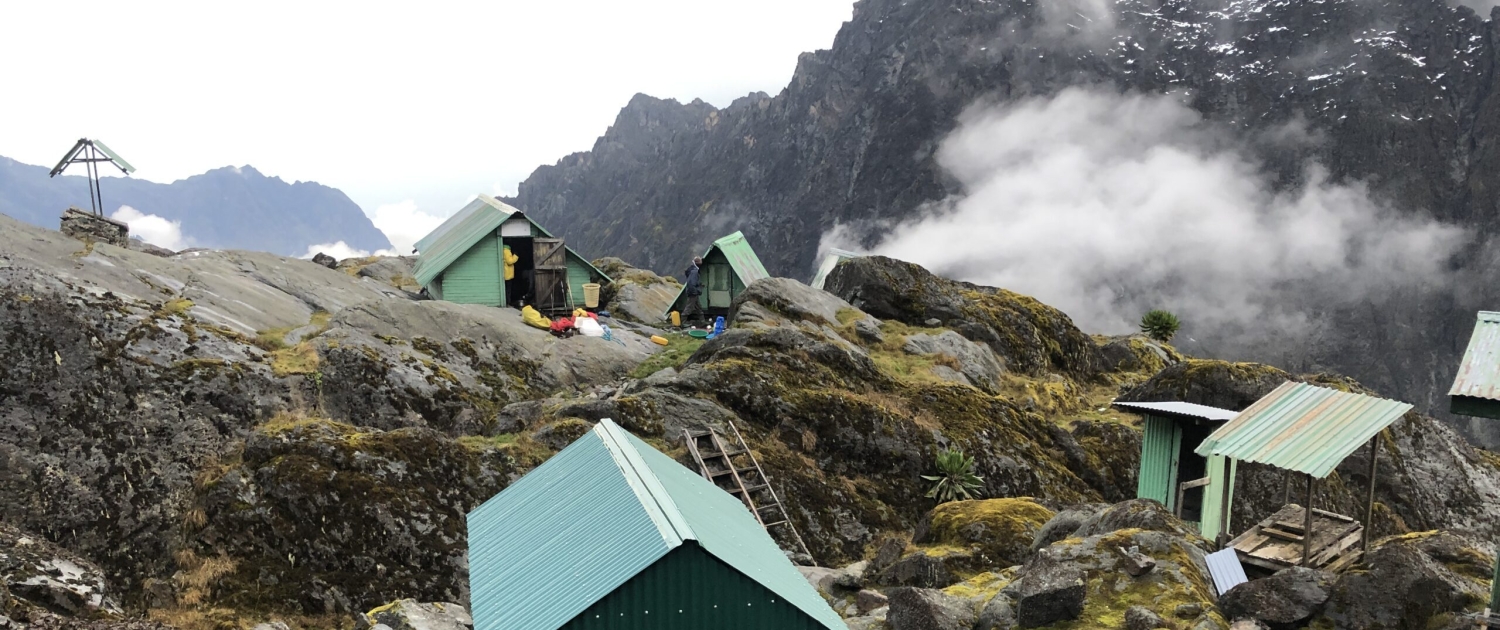
The hut itself is small and built among rocks to reduce wind exposure. Conditions are cold throughout the night, and this stop is mainly used for preparation before the early summit push.
Key attractions: Mount Stanley glacier views, rocky alpine terrain, summit route visibility, high-altitude extreme environment, historic expedition climbing area.
Kitandara Camp (4,023m): Twin Lakes in a Calm Alpine Valley
Kitandara Camp is one of the most scenic and peaceful overnight stops on the Central Circuit. It is located in a broad basin surrounded by steep mountain walls and sits beside two beautiful alpine lakes.
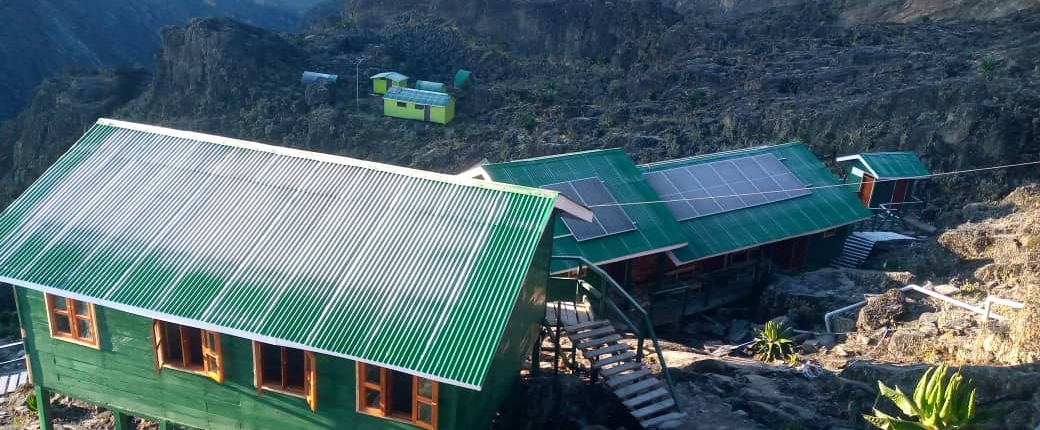
The twin lakes are the main highlight of this area. Their still surfaces often reflect surrounding peaks, creating mirror-like views that change with weather and light. This gives the camp a softer and more relaxing atmosphere compared to higher glacier zones.
Waterfalls flow into the basin from surrounding slopes, and alpine vegetation covers the surrounding terrain. Birdlife is present, and the environment feels calm and restorative, especially after summit attempts.
Key attractions: Twin Kitandara Lakes, mountain reflections, alpine waterfalls, birdlife around lakes, peaceful recovery valley, panoramic alpine basin scenery.
Guy Yeoman Camp (3,261m): Bamboo Forest Return and Waterfall Valleys
Guy Yeoman Camp marks the return from high alpine zones into greener vegetation. The descent passes through bamboo forests, steep ridges, and thick rainforest sections that feel alive and dynamic compared to the upper mountain.
Waterfalls and rivers become more frequent along the trail, cutting through valleys and adding sound and movement to the environment. The air becomes warmer and more humid as altitude decreases.
Birdlife increases significantly here, and forest activity becomes more noticeable. The camp sits in a sheltered valley surrounded by dense vegetation and flowing water systems, offering a comfortable resting point after long descents.
Key attractions: Bamboo forest zones, cascading waterfalls, river valleys, rich birdlife, rainforest return scenery, sheltered green mountain valley.
Final Reflection: A Chain of Camps That Shape the Entire Journey
The Central Circuit trail is defined by its overnight camps, each one marking a different stage of altitude, climate, and landscape. Together, they guide trekkers from rainforest floors to glacier peaks and back again through bamboo and forest zones.
Each camp has its own identity. Some are quiet forest ridges, others are open alpine basins or rocky high-altitude shelters. Around them, nature provides the real attraction—rivers, lakes, wildlife, giant plants, and dramatic mountain scenery.
These overnight stops are more than rest points. They are the structure of the journey itself, shaping safety, acclimatization, and experience. The full story of the Rwenzori Mountains National Park is best understood through these camps, where every night adds a new layer to the expedition.